
Can I Leave My A-Frame Sign Outside Overnight?

Written by eSigns Editorial Team • Published on April 8, 2026
At a Glance
- It depends. Some A-frame signs can stay outside overnight, but only in the right conditions.
- The weather is the biggest risk, especially wind and overnight rain.
- Theft and tampering can also be a big factor for your A-signs.
- Plastic Signicade-style frames are more forgiving than metal insert frames, but not indestructible.
- A simple closing checklist can prevent most damage with minimal effort.
Leaving your A-frame sign outside overnight might seem like a minor choice, but it can make a difference.
You’ve invested in your sign and use it daily. At the end of the day, everyone is tired and ready to leave, so bringing the sign inside can feel like an extra task. That’s why this question comes up so often: Is it okay to leave it out overnight?
The honest answer: Sometimes it's fine, sometimes it's not. Recognizing when it’s risky helps protect your sign and your business’s reputation.
This guide is for owners and managers who use an A-frame every day and want to balance convenience with risk, especially in busy areas where foot traffic, weather, and surprises all come into play.
The article can help you decide whether to leave your A-frame out overnight and use these tips in your daily routine.
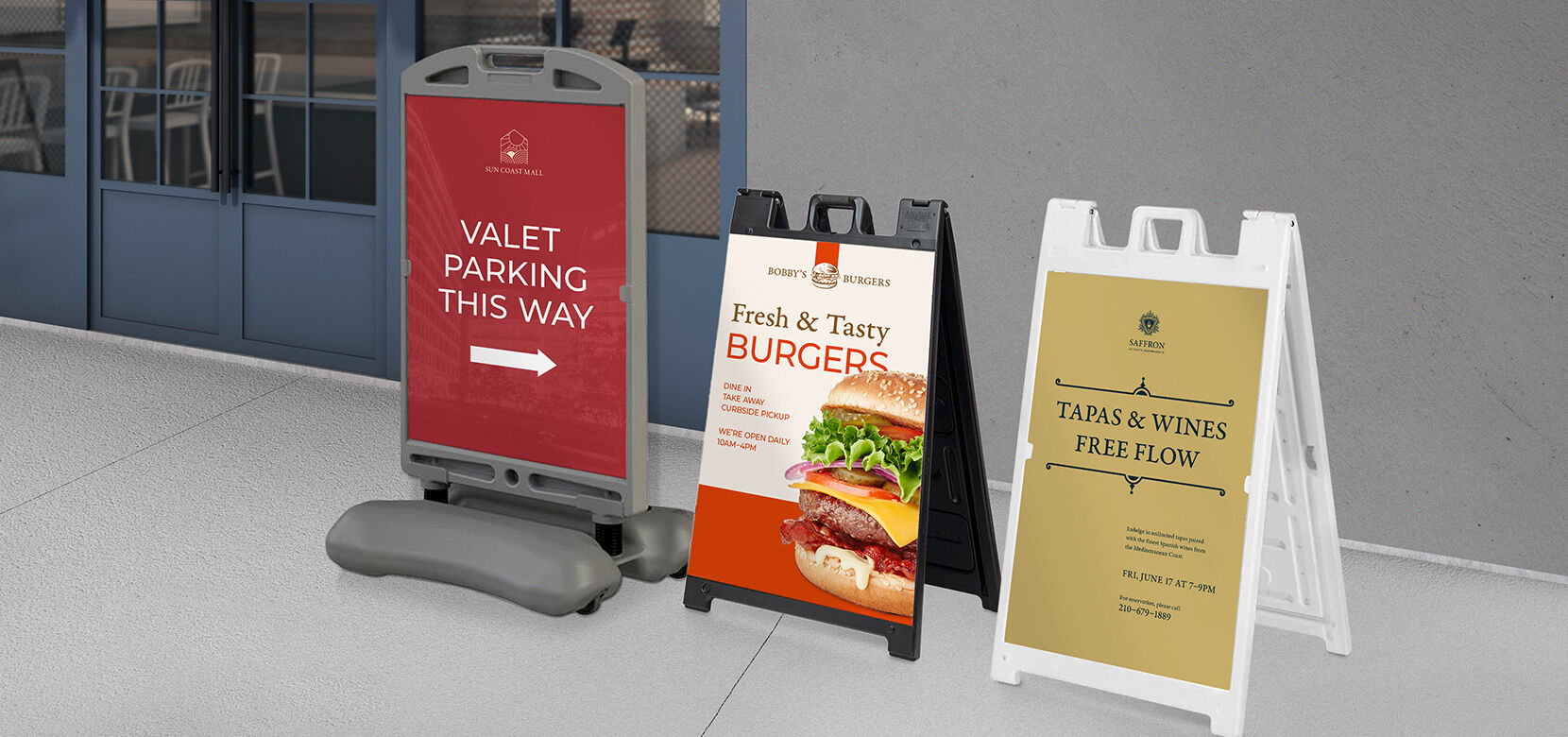
A-Frame Signs During Business Hours vs. Overnight
During the day, your A-frame sign gets help from things you might not even notice.
- Staff are nearby and can move the sign if needed.
- People walk by in regular patterns.
- The sign stays visible, which helps prevent tampering.
- You can also spot changes in the weather, such as when the wind picks up.
In short, these signs are well looked after during business hours. But if you leave them out at night, you risk situations you can’t control.
Weather damage from wind and moisture, tampering, and especially theft can all harm your business if you leave your signs out overnight.
When Leaving A-Frames Outdoors Overnight is a Good Idea
A-frame signs are usually designed for use during the day. However, some businesses still choose to leave them out overnight, and in some cases, this choice can bring good results.
Businesses in secure areas, on well-lit sidewalks, or in places with lots of nighttime activity may get more brand visibility from A-frames without much risk.
Other places, like 24-hour restaurants, convenience stores, cafés, and nightclubs, allow staff to keep an eye on their signs even late at night. Still, if you want to get the most out of your A-frame signs at night, there are certain steps you should take.
1. Start by Choosing the Proper A-Frame Materials
A-frame signs come in different styles and materials. Some are designed to last a long time, even if you leave them out overnight.
Plastic “Signicade Style” A-Frames
These are the most popular sidewalk signs for good reason:
- They are made from heavier plastic.
- The molded feet help them sit flat on the pavement.
- You can often fill them with water or sand to keep them steady.
In short, these can sometimes be left out overnight, but only if the weather and other conditions are suitable.
Metal Sidewalk Frames With Printed Inserts
These signs look sleek and professional, but they are not as durable if left out overnight:
- They are lighter overall.
- The inserts can get wet from moisture.
- The frames might twist or tip over if the wind is strong.
These signs are riskier to leave out overnight, especially in open or windy places. Best use these for short-term promotions during the day.
2. Doing a Weather Check On Outdoor Signs
If you want to leave your A-frame signs outside overnight, make sure they're ready for changing weather. First, check that your sign is stable, set up in the right spot, and built to handle being outdoors for a long time.
Secure Your Sign Against Overnight Wind
Even a light breeze at night can move or tip over your sign when no one is there. To help prevent this:
- Place signs on flat, level surfaces.
- Position them away from open corners where gusts of wind pass through.
- Add weight (like sandbags) to the base when possible.
Protect Your Inserts from Moisture
The frame might be sturdy, but your graphics need some extra protection:
- Use waterproof or laminated prints instead of paper posters.
- Choose sealed coroplast inserts to prevent edge absorption.
- Check that panels fit snugly to avoid water pooling inside.
Plan for Rain, Not Just Drizzles
A little rain is usually fine, but leaving your sign out all night can cause problems over time:
- Avoid leaving signs out during heavy or prolonged rain.
- Tilt signs slightly to prevent water from settling on surfaces.
Consider Early Sun Exposure
The sun might not seem like a problem right away, but if you leave your A-frames out all day, it can affect how well they work at night. Here are some things to consider for your A-frames during the day:
- Be mindful of east-facing placement.
- Use UV-resistant inks to slow fading and discoloration.
3. Theft and Tampering: The Overnight Reality
Most people think about the weather when deciding whether to leave A-frames out overnight, but theft and vandalism can also cause unexpected problems for your business.
Some concerns when displaying A-frames at night include:
- Foot traffic late at night can be unpredictable.
- Sometimes, people who are bored or have been drinking move signs just for fun.
- Metal frames are easy to carry away, so people sometimes take them.
Plastic Signicades can have problems too. Even if they aren’t stolen, they are often:
- Knocked over repeatedly.
- Dragged into the street.
- Used as makeshift seating or obstacles.
By taking a few simple steps, you can lower the risks and keep your signs where they belong.
- Add Weights to Make Signs Harder to Take
- Use sandbags or weighted bases.
- Choose heavier frames when possible.
- Attach Signs to Something Sturdy
- Use chains or steel cables to attach them to poles, railings, or fixtures.
- Keep locks low and tight to secure your A-frames and limit movement.
- Don't Put Signs in Isolated Spots
- Keep signs close to your storefront or entrance.
- Avoid placing them in dark corners or far from foot traffic.
- Place Signs Where Cameras Can See Them
- Place signs where security cameras can clearly capture activity.
- Keep them within well-lit areas at night.
4. The Operational Sweet Spot: Make It Easy to Do the Right Thing
Most damaged A-frames are not left out overnight on purpose. Sometimes routines slip, and staff may forget to bring them in. By making a few changes to your work schedule and deciding when to leave A-frames out, you can help your signs last longer.
- Decide When to Leave the Sign or Bring it In
Like any marketing effort, your business should have clear rules for handling signs:- Start by deciding when to put your signs out and when to bring them in.
- Choose specific staff members to look after and maintain the A-frames during your campaign.
- Keep track of how long your campaign runs and always bring the sign in when it ends.
- Build It Into Closing, Not Cleanup
Take the sign in before you begin other closing tasks.- Decide early in the shift who will be in charge of putting out and bringing in the A-frames.
- Make sign removal part of locking the door or closing the register.
- Keep the sign in a visible spot, not tucked away, so it is easy to find and set up next time.
- Adjust the A-frame's Weight Strategically
If you sometimes leave a plastic frame outside:- Always use water or sand to weigh it down.
- Check the fill caps once a month.
- Make sure the filling is even so the frame does not wobble.
- Use Overnight-Friendly Inserts
To get the most out of your promotions at night, design your A-frames so they work well after dark.- Choose waterproof materials so your signs last longer.
- Use UV-protected inks that slow fading.
- Sealed edges matter more than thickness. Make these upgrades to avoid frequent graphic replacements; they cost less.
Some Final Thoughts
Leaving your A-frame sign outside overnight is not a mistake or a poor business decision. It is a calculated risk. One that many business owners often do to get the most out of their promotions.
Business owners make small, steady choices based on the weather, location, and materials. This helps keep signs upright, easy to read, and looking cared for instead of worn out. This is what makes signs all the more useful for promotions, whether it’s day or night.
If you are thinking about reviewing, replacing, or upgrading your A-frame sign and want options for everyday use, visit eSigns.com to find sidewalk A-frame solutions designed for durability and practicality.
Related Articles
Where to Put an A-Frame Sign: A Simple Placement Guide
Wondering where to place your A-frame sign? This eSigns guide shares tips to boost visibility, foot traffic, and customer decisions.
Read More →
Are A-Frame Signs Allowed on Sidewalks?
Are A-frame signs ADA compliant? Learn simple sidewalk clearance, height, and placement rules to avoid fines and complaints
Read More →
How to Secure A-Frame Signs Outdoors in Windy Areas
Learn simple tips from eSigns to keep A-frame signs from falling over in windy areas. Check out cover placement, weighting, and plastic vs. metal signs.
Read More →Data Subject Rights

Privacy Request
You may have certain rights with respect to the personal information we collect and process. These rights vary by state and country and depend on your residency. These rights are not absolute and we reserve all of our rights available to us at law in this regard. Please complete the below form to exercise one of your data subject rights, where applicable. We will process your request within the time provided by applicable law.