
How to Secure A-Frame Signs Outdoors in Windy Areas

Written by eSigns Editorial Team • Published on April 8, 2026
At a Glance
- Most A-frame signs fall over because they are not suited to where they are placed.
- Adding weights can help, but where you put them is often more important.
- Plastic and metal A-frame signs react differently when it is windy.
- You can usually fix the problem with a few small setup changes, and you do not need any special tools.
- If your sign keeps tipping over, it is usually a setup issue you can fix, not a problem with the product itself.
If you've ever set up an A-frame sign outside your business and found it lying flat a few minutes later, don't be alarmed. Even a light breeze can tip over the sandwich board sign if it catches it at just the wrong angle.
When you know how wind affects your sign, you can make a few simple changes to keep it standing. There's no need to buy a new sign or make things complicated.
Here are some tried-and-true tips to help your A-frame signs stay upright every day.
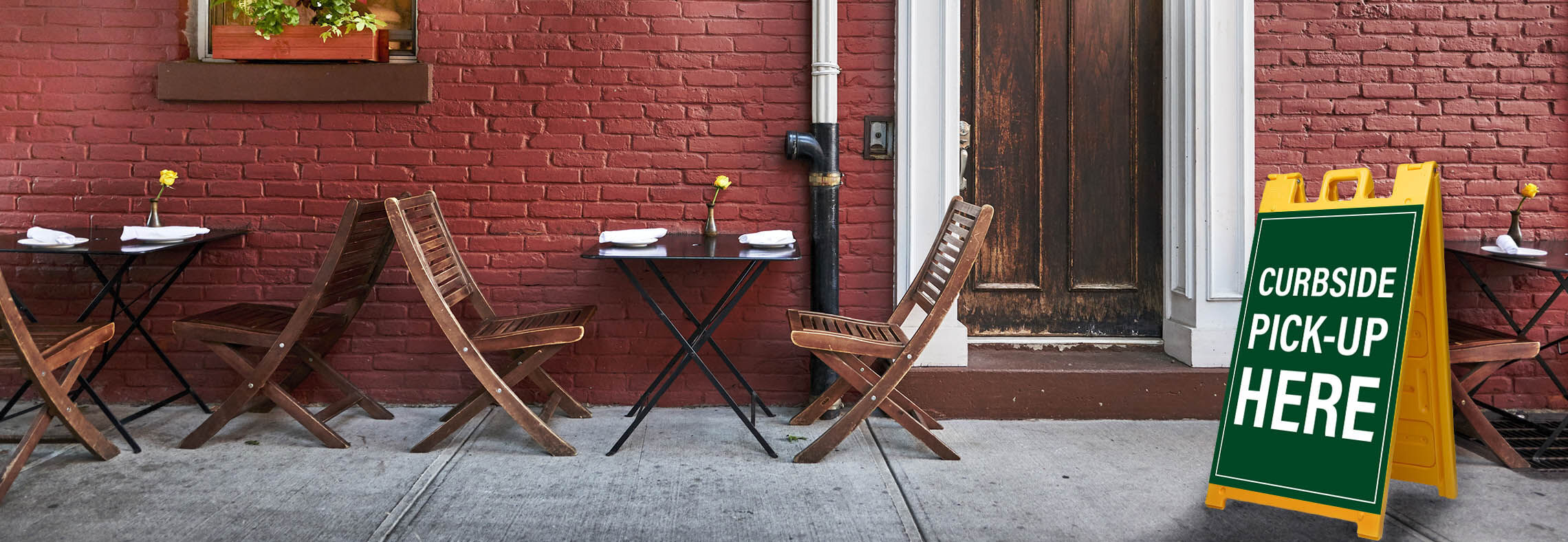
Tip #1: Choose the Right A-Frame Material for the Location
Not all A-frame signs handle wind the same way. You should differentiate plastic and metal signs beyond material and looks. Also, choose the sign material based on its placement and location.
Plastic A-frame signs are usually light, but you can add weight to them. When filled correctly, they often handle wind better in open spaces because they bend a little rather than fighting it directly.
Metal A-frame signs rely on their weight and stiff build. They work well in calm or partly sheltered spots, but can tip over quickly in windy places because they do not bend in gusts.
If your sign will often face windy conditions:
- Plastic A-frames with filled bases usually stay upright more reliably.
- Metal A-frames need careful placement to keep them from falling over.
Tip #2: Add Weights to Your Sign the Way It Was Meant to Be Weighted
Speaking of plastic signs, they usually come with hollow basins for filling with sand or water. Leaving them empty or partially filled will likely cause them to tumble over. If you are planning to display plastic A-frame signs during windy conditions, you should take note of the following:
- Make sure to fill both sides evenly so the sign stays balanced.
- Use the same material in both sides, either all water or all sand.
- Check the bases from time to time for leaks or evaporation.
Avoid using quick fixes like hanging weights, chains, or bags from the sign. These can raise the center of gravity and make the sign less stable.
Tip #3: Pay Attention to Where You Place Your Signs
The spot you choose for your sign is often more important than how heavy it is. Wind doesn't move the same way everywhere outside. Nearby buildings and structures can make it speed up or change direction. Sometimes, just moving your sign a few feet can make it much more stable.
A-frame signs usually work best in these spots:
- Near storefront walls or recessed entrances
- In areas broken up by planters, railings, or seating
- Slightly back from wide-open walkways
Meanwhile, they have the most trouble in these places:
- At sidewalk corners
- In wide, open parking lots
- In direct wind corridors between buildings
Try moving your sign to a better spot before adding extra weight or accessories.
Tip #4: Angle the Sign to Work With the Wind, Not Against It
The direction a sign faces is just as important as where you put it. If an A-frame sign faces the wind, it can catch the air like a sail and fall over. Turning it a bit lets the wind move around it more easily.
If your sign keeps falling over, try these steps:
- Turn the sign so it does not face the wind directly.
- Watch which way the sign usually falls. This can show you how the wind moves through the area.
Making this change often stops the sign from tipping over in the wind.
Tip #5: Be Mindful of Your Sign's Design and Surface Area
Wind affects a sign based on its shape just as much as its weight. Large, solid panels catch more wind than signs that let air pass through. You don't have to change your whole sign, but knowing how your design affects stability can help.
Signs usually handle wind better when they:
- Avoid using large, solid panels.
- Keep the visual weight balanced on both sides.
- Don't put all the heavy graphics on only one side.
Balanced, evenly designed signs behave more predictably outdoors.
Tip #6: Watch for Sliding, Not Just Tipping
If your A-frame sign slides before it falls, the problem is not the weight but the traction.
Signs can drift in the wind on smooth concrete, tile, or sealed sidewalks. Once they start sliding, they are much more likely to tip over.
If this happens, try the following:
- Move the sign to a surface with some texture if you can.
- Place the sign closer to a wall or a sturdy object to help block the wind.
- Make sure the feet are flat and even on the ground.
Tip #7: If It Keeps Falling Over, Diagnose the Pattern
If your A-frame sign keeps falling over, there might be a design issue. Watch how it falls to help you figure out what needs fixing.
Consider these questions:
- Does the sign always fall in the same direction?
- Does it only tip over at certain times of day?
- Has anything nearby changed, like construction, a new open space, or removed barriers?
Using the earlier tips can help you check your A-frame's quality and sturdiness. If nothing works, think about getting a new A-frame that will stay upright in your space.
Conclusion
Choosing the right material, placing the sign smartly, and setting it up as designed will keep an A-frame sign upright in windy areas. Basically, there's no complicated engineering or constant adjustments needed.
When these factors come together, A-frame signs are still one of the easiest ways to reach people walking by outside, without causing you extra hassle each day.
If you're looking for a new A-frame or need to replace one that didn't last, eSigns.com has a range of options built for real-world use. We can help you find the best sign for your location.
Related Articles
Where to Put an A-Frame Sign: A Simple Placement Guide
Wondering where to place your A-frame sign? This eSigns guide shares tips to boost visibility, foot traffic, and customer decisions.
Read More →
Are A-Frame Signs Allowed on Sidewalks?
Are A-frame signs ADA compliant? Learn simple sidewalk clearance, height, and placement rules to avoid fines and complaints
Read More →
Can I Leave My A-Frame Sign Outside Overnight?
Can you leave an A-frame sign outside overnight? Learn when it’s okay or risky, and explore eSigns A?frame options.
Read More →Data Subject Rights

Privacy Request
You may have certain rights with respect to the personal information we collect and process. These rights vary by state and country and depend on your residency. These rights are not absolute and we reserve all of our rights available to us at law in this regard. Please complete the below form to exercise one of your data subject rights, where applicable. We will process your request within the time provided by applicable law.