From the real estate sign next door to the punny quip outside the coffee shop, we’ve all seen yard signs in our neighborhoods. They’re a simple and effective way to call customers' attention and generate buzz in the community.
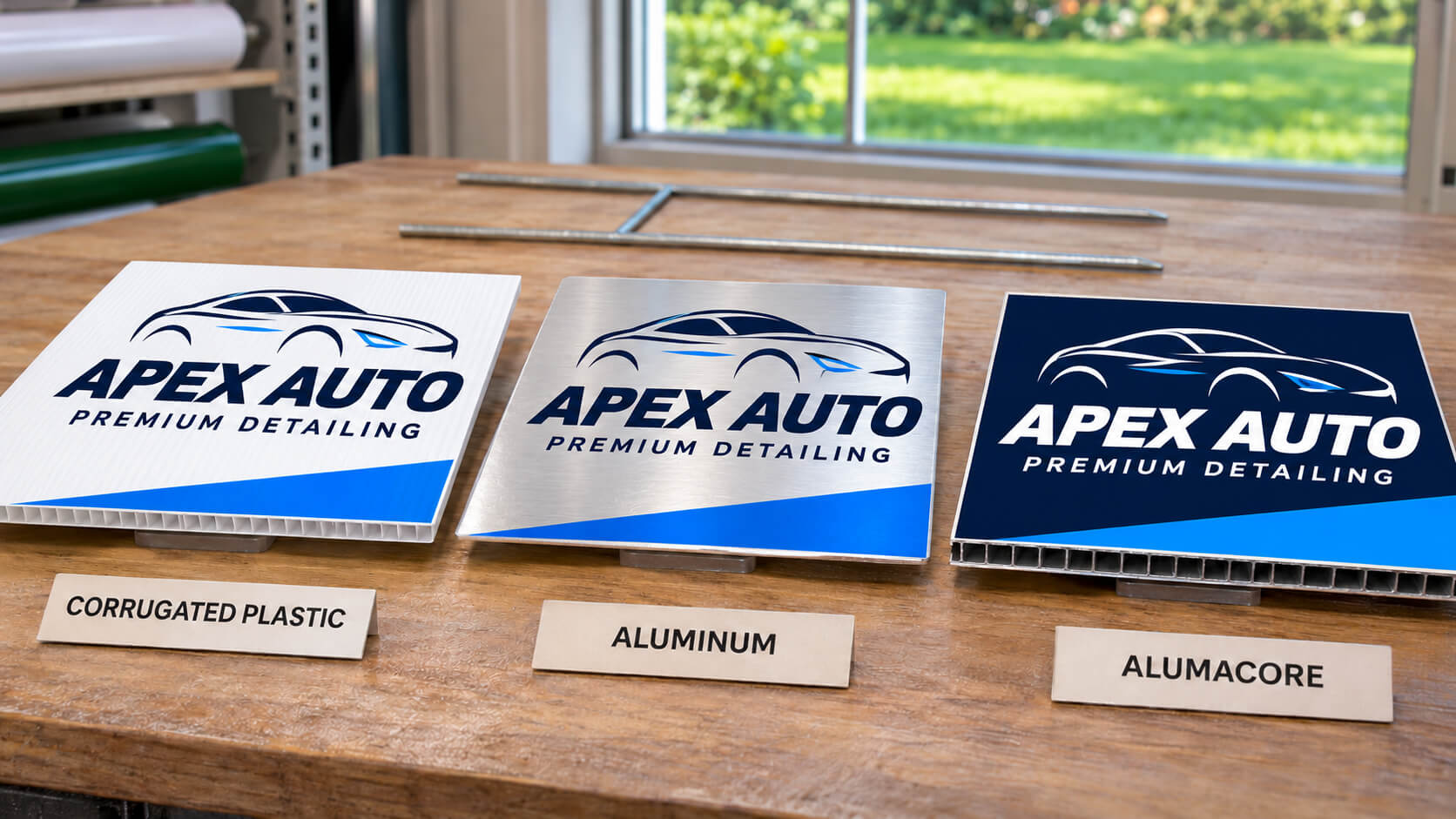
Yard signs send an important message, but not just with words. What your sign is made of is just as important as what it says. Make sure the material is durable enough to withstand the elements so your message isn’t just seen but also remembered. Keep reading to learn more about yard sign materials and how to pick the best one for your needs.
Key Takeaways
- The best yard sign material depends on your budget, display duration, and desired appearance.
- Coroplast is easy to move, store, and customize, but its visible texture makes it less suitable for detailed photos.
- Aluminum supports high-quality images and double-sided printing, though it costs more than coroplast and requires supporting posts.
- Alumacore combines aluminum sheets with a corrugated plastic core for lightweight, temporary indoor or outdoor signage.
Three Materials for Yard Signs - Pros & Cons
Corrugated Plastic (Coroplast)
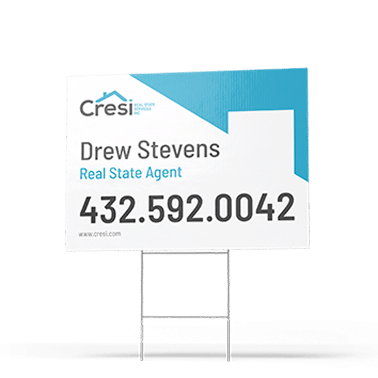
Corrugated plastic, or coroplast, is the go-to material for many yard signs. These are the ‘For Rent’ signs you usually see outside apartment buildings, or the political signs touting a candidate’s name that pop up during elections. Many business owners order yard signs in coroplast for its quality, longevity, and affordability. The material is made up of three layers of plastic which ensures durability without making it too heavy. In fact, it’s light enough to be moved around and store after use. Coroplast is also weather-resistant so your outdoor sign is protected from the rain and won’t fade in the sun.
Pros and Cons of Coroplast
Aluminum
When it comes to a long-term outdoor display, aluminum is the first choice of realtors for their yard signs. Its metal finish gives a sleek and sophisticated look making potential buyers feel that the property is worth their investment. The deep colors and contrasts that can be achieved using aluminum also distinguish the sign’s details when seen from afar.
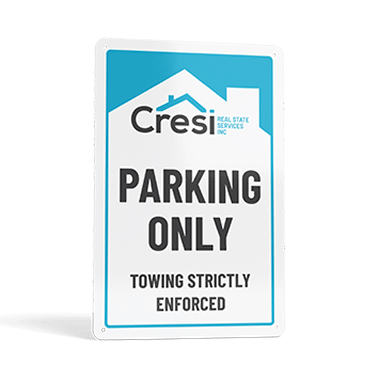
Thanks to its extreme durability, businesses also use aluminum on informational displays like warning signs, parking directions, and other property-related messages. Its rust-free which means it can weather the elements especially when its displayed outdoors or areas near water (think properties near the beach or those that have pools). This material is also recommended for businesses that can spend a little extra and want their signs displayed for years. Plus, aluminum offers durability and high image quality at a fair price.
Aluminum Pros and Cons
Alumacore
Alumacore has the combined strength of aluminum and coroplast. The material is composed of a polypropylene core or corrugated plastic that’s sandwiched between two pre-painted aluminum sheets. It’s much lighter compared to aluminum but is equally durable. Businesses typically use Alumacore for signages displayed for a few months. Alumacore signs last longer than coroplast but they aren’t recommended for permanent displays.
Alumacore Pros and Cons