
What’s the Difference Between Chalkboard, Dry-Erase, and Printed A-Frame Signs?

Written by eSigns Editorial Team • Published on April 10, 2026
At a Glance
- Chalkboard A-frames are best for businesses that change messages frequently and want a casual, hand-written look — but they require more daily upkeep.
- Dry-erase A-frames allow for quick updates with a cleaner appearance and less mess, making them a good fit for busy operations that still need flexibility.
- Printed A-frame signs deliver the most professional, brand-consistent look with minimal maintenance, ideal for fixed messaging or long-term use.
- The "best" option depends on your daily business operations.
- Consider workflow, consistency, and how much time your team can realistically spend updating signage when choosing an A-frame sign.
A-frame signs come in three types: chalkboard, dry-erase, and printed. When choosing, consider how the sign fits your daily operations, not just its materials.
You might ask: How often will I need to change the message? Will the sign reflect the professional image I want for my business? Who on my team will be responsible for updates, and how much time will that take? Will the sign withstand outdoor conditions at my location?
The truth is that each type meets different needs. The best choice is not what stands out online, but what aligns with your workflow, pace, and brand.
Not sure which sign is right for you? This eSigns guide explains each A-frame type and offers practical tips to help you confidently select the one that fits your business.
Chalkboard A-Frame Signs: Flexible Messaging With a Personal Touch
Chalkboard A-frames are common outside cafés, boutiques, and local shops. Their main strength is flexibility, but it comes with trade-offs.
Chalkboard signs shine in businesses where:
- Messages change daily or multiple times a day
- The tone is casual, friendly, or artisanal
- Staff members are comfortable writing and updating signage
What They’re Like to Use Day to Day
Chalkboard A-frames need manual updates whenever the message changes. That means:
- Someone needs to write the message clearly and legibly
- Chalk dust and residue need occasional cleaning
- Spelling, spacing, and handwriting consistency matter more than people expect
Some businesses tend to underestimate the effort required to maintain a chalkboard A-frame. A well-written sign should always feel warm and inviting, and a rushed or smudged one can look sloppy and distract from your brand.
Visual Impact and Brand Impression
Chalkboard signs give an approachable, informal feel—great for businesses with a local or creative vibe. They’re less ideal if:
- You need strict brand consistency across multiple locations
- Your brand image is more modern, polished, or minimal
In short, chalkboard A-frames add personality, but they rely heavily on execution.
Dry-Erase A-Frame Signs: Fast Updates with a Cleaner Look
Dry-erase A-frames offer the perfect balance of flexibility and professionalism. They have the chalkboard's quick-update capability but present a cleaner appearance.
Dry-erase A-frames work well for businesses that:
- Change messaging often, but prioritize speed and cleanliness
- Don't want chalk dust or residue
- Need multiple staff members to update signage reliably
For example, dry-erase A-frames are common in gyms announcing class schedules, salons promoting walk-ins, or service businesses sharing daily reminders.
Operational Advantages
Compared to chalkboard signs, dry-erase A-frame signs offer messages that are easier to erase and rewrite, whiteboard markers that are easier to control than chalk, and a surface that stays cleaner with less maintenance.
If signage updates are part of your opening checklist, dry-erase saves time and reduces frustration.
Appearance and Consistency
Dry-erase A-frames look more structured than chalkboards, but they still depend on:
- Marker quality and ink color choices
- Consistent handwriting
- Keeping old markings fully erased
Choose dry-erase A-frames if your business needs flexibility without the full “handwritten chalk” aesthetic.
Printed A-Frame Signs: Set It and Forget It Professionalism
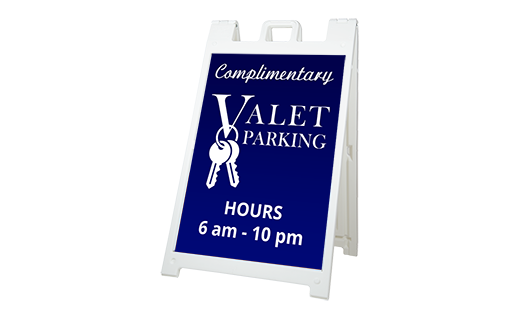
Printed A-frame signs are not flexible, unlike chalkboard and dry-erase A-frames. They are best for businesses that use the same message day after day, want zero daily maintenance, and prioritize brand consistency and professional appearance.
Once printed, the sign does its job without requiring staff time, decision-making, rewriting, erasing, or second-guessing.
Examples include:
- “Open” or “Now Open” signage
- Wayfinding or directional messaging
- Core promotional messages
- Branding and logo-forward signage
Brand Consistency at Scale
Printed signs allow you to:
- Match brand colors precisely
- Use approved fonts and layouts
- Ensure consistency across locations
For franchises, multi-location businesses, or brand-driven companies, this level of control matters more than flexibility.
The Tradeoff: Less Flexibility, More Reliability
Printed A-frames aren’t ideal if your message requires frequent updates daily. However, if your message is stable, they often deliver the highest ROI in terms of time saved and visual impact.
Which One Fits Your Workflow?
Instead of asking “Which A-frame is better?” consider:
“How does my staff actually use signage during a normal week?”
Here’s how each type compares:
| How Your Business Operates | Best-Fit A-Frame Type | Why It Works |
|---|---|---|
| You change messages daily and want a friendly, hand-written feel | Chalkboard A-Frame | Works well when messaging feels personal and you’re comfortable dedicating time to writing, cleaning, and keeping it legible. Best when personality matters more than polish. |
| You change messages often but need speed and less upkeep | Dry-Erase A-Frame | Faster updates, cleaner look, and easier for multiple staff members to maintain consistently—ideal for busy, fast-moving operations. |
| Your message rarely changes and brand consistency matters | Printed A-Frame Sign | Delivers a professional, finished look with no daily effort. Once it’s in place, staff can focus on customers instead of signage upkeep. |
Outdoor Considerations
All A-frame types can be used outdoors, but their durability depends on:
- Frame construction
- Placement location (sidewalk vs. sheltered entry)
- Exposure to wind, sun, and moisture
Printed A-frames tend to hold up best visually over time, while erasable surfaces may require more frequent cleaning outdoors. No matter the type, keeping your A-frame sign out of constant foot traffic and protected from extreme weather is essential for its longevity.
Conclusion
The right A-frame sign should fit your business workflow, not just your aesthetic. Chalkboards add warmth and personality but require frequent changes. If you’re looking for something that lets you make quick updates with minimal effort, dry-erase is your best option. Lastly, if you want consistent messaging with minimal upkeep, printed A-frames are a suitable choice.
If you’re ready to explore professionally made A-frame sign options that align with your business operations, eSigns.com offers customizable solutions designed for clarity, durability, and ease of use.
FAQs
Can I mix different A-frame types for one business?
Yes, and many businesses do. For example, a printed A-frame for core branding plus a chalkboard or dry-erase sign for daily specials.
Do chalkboard and dry-erase signs look unprofessional?
Not if executed well. Clean writing, thoughtful layouts, and routine maintenance keep them looking polished.
Which option is easiest for staff training?
Printed A-frames require no training at all. Dry-erase is easier than chalkboard, especially for teams with frequent turnover.
What if I’m unsure how often I’ll change my message?
Start with flexible options like chalkboard or dry-erase. Once messaging stabilizes, switch to printed for long-term consistency.
How long do A-frame signs last outdoors?
This depends on the frame material, placement, and exposure to weather. Printed signs can last longer visually, while chalkboard and dry-erase need more maintenance.
Related Articles
Standard A-Frame Sign Sizes: How to Choose the Right One Without Overthinking It
Confused about A-frame sign sizes? This eSigns guide covers standard sizes, common uses, and which fit sidewalks, storefronts, and events.
Read More →
Plastic vs. Metal A-Frame Signs: Which One Makes Sense for Your Business?
Choosing between metal and plastic A-frame signs? This eSigns guide compares durability, portability, cost, and brand impact before you invest.
Read More →
Mistakes Businesses Make When Designing A-Frame Signs (And How to Fix Them)
Common A-frame design mistakes limit sidewalk signs. This eSigns guide shows top errors and how to design clearer signs that attract foot traffic.
Read More →Data Subject Rights

Privacy Request
You may have certain rights with respect to the personal information we collect and process. These rights vary by state and country and depend on your residency. These rights are not absolute and we reserve all of our rights available to us at law in this regard. Please complete the below form to exercise one of your data subject rights, where applicable. We will process your request within the time provided by applicable law.