
Sports Signage and Wayfinding: How to Keep Game Day Moving Smoothly

Written by eSigns Editorial Team • Published on August 22, 2026
Sports signage plays a key role in helping teams get noticed and build fan support. Beyond branding and sponsorship signs, clear wayfinding signs are important for keeping sports events organized, running smoothly, and easy for everyone to navigate.
A well-planned signage system helps players, families, officials, and fans find their way from the entrance and parking to the right fields, facilities, and activity areas. In this article, we’ll share some tips on how to organize your signs and symbols to make game day easier for everyone.
Begin By Creating a Visitor Journey
Start by using what you know about the arena to map out the path visitors will follow. Imagine game day from their point of view, beginning with finding the entrance and parking, and ending at the right field seating. Divide this journey into three stages:
| Stage | What the visitor needs | Goal of the sign | Example |
|---|---|---|---|
| Arrival | The visitor wants to know whether they are in the right place. | The sign should confirm the venue and correct entrance. | An entrance banner confirms that the visitor has reached the location. |
| Decision | The visitor needs to know which direction to take next. | The sign should clearly direct the next turn or route. | A directional sign tells visitors that Fields 1–4 are to the left. |
| Destination | Confirm that the visitor is at the correct spot for the event. | The sign should clearly identify the destination. | A sign confirms that the visitor has reached Field 4. |
Next, write down the signs needed for each stage. For example, use one sign for parking and another for field directions. Make sure each message is clear so visitors always know where to go next.
Build Your Signage Around Decision Points
Part of the visitor’s journey is identifying the points where visitors need to decide where to go next. These decision points should shape your signage plan.
Prioritize signs at:
- Venue entrances to direct arriving traffic
- Parking areas to guide drivers and pedestrians
- Pathways and intersections to point visitors toward fields
- Bleachers and seating areas, specifically to help with reserved seating
- Field zones to identify playing areas and routes
- Facility routes to direct people to restrooms, concessions, first aid, and event headquarters
Place directional signs before each decision point, giving visitors enough time to read and follow them. Use signs at destinations to confirm arrival, while signs along the route should keep people moving in the right direction.
Choose the Right Sports Signage for the Job
Once you have mapped out the key decision points and important areas in your sports venue, choose signs that fit each spot. Each location has its own communication needs, so you don’t have to use the same sign everywhere. Use the sample chart below to help you:
| Sign type | How it can be used on game day | What it helps accomplish |
|---|---|---|
| Yard signs | Yard signs show people where to find fields, check-in spots, and walking paths in grassy areas. | These signs make it easy to spot locations and find your way around outdoor spaces. |
| Parking signs | Color-coded parking signs help spectators, team members, volunteers, and officials park in the right spots. | These signs keep traffic moving smoothly and help drivers avoid parking in the wrong place. |
| Directional signs | Directional signs point people toward fields, restrooms, concessions, first aid, and locker rooms. | They help visitors navigate intersections and new areas of the venue. |
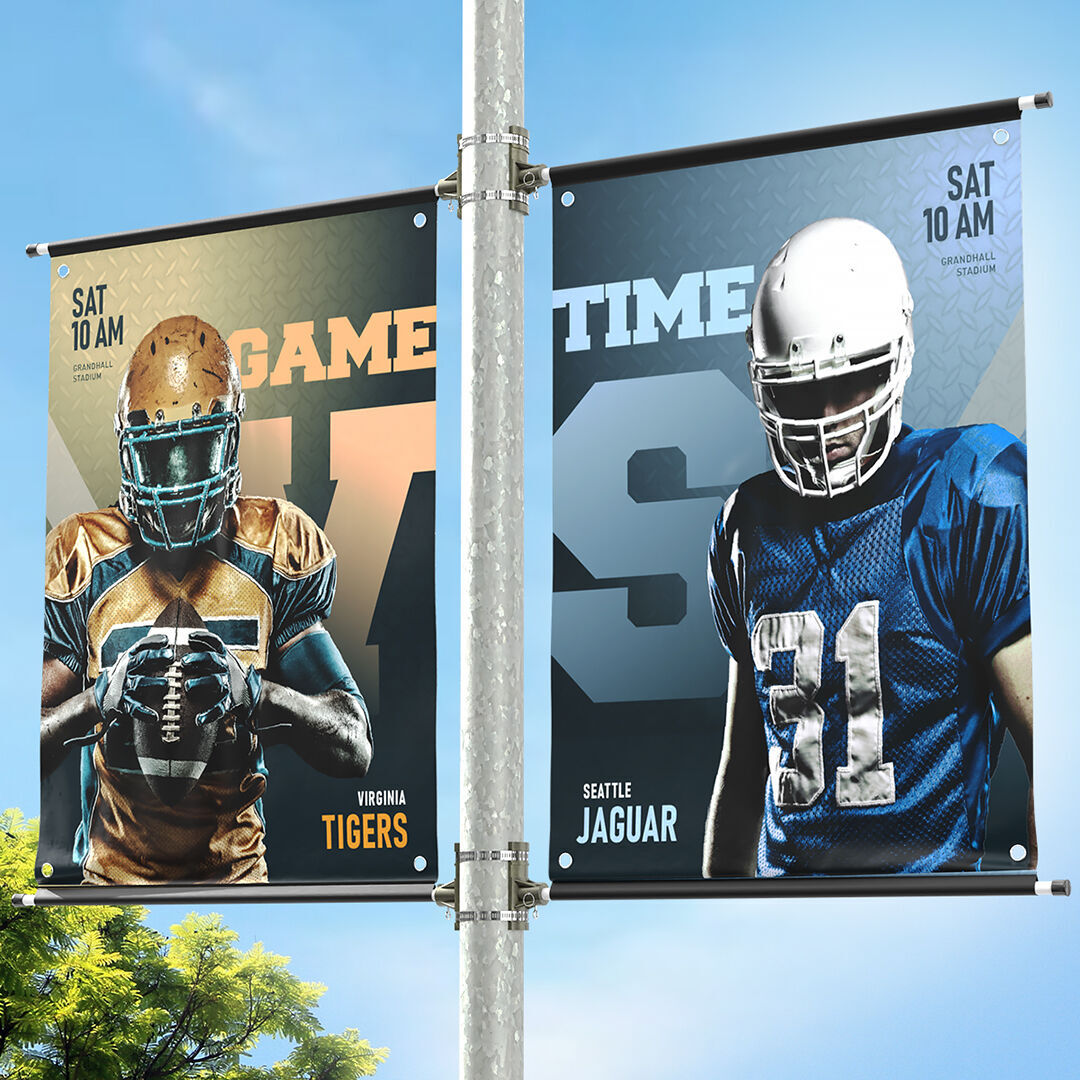
| Event banners | Event banners help mark the main entrance, registration area, or central meeting spot. | They let visitors know they have arrived at the event or another important location. |
| A-frame signs | Portable A-frames can share check-in steps, temporary routes, or schedule updates. | They give organizers a flexible way to update information when changes happen throughout the day. |
Make Directions More Important Than Promotion
Signs for promotions and branding are vital to showcase the game and the competing teams. However, when in the arena itself, it should be secondary to the important logistics signs.
Make sure wayfinding signs help visitors find their way easily. Show directions, locations, and other important details more clearly than logos or promotional images.
- For directional signs, focus on making navigation clear and easy to read.
- For promotional signs, put branding in spots where it will not take attention away from directions.
By keeping these purposes separate, you make navigation easier and still give sponsors and organizers the visibility they want.
Design Signs to Be Understood Quickly
Once directions take priority over promotion, decide what visitors should notice first, second, and third. A clear visual order helps people find what they need quickly, without stopping to study the sign:
- Make direction and destination your top priority and ensure they stand out the most. Use clear visual symbols and markers, such as arrows, to help people find their way easily.
- Next priority: add supporting information that helps explain the destination and markers. Keep this information brief with simple notes or short phrases so the sign stays easy to understand.
- Branding comes third. Besides promoting your event, it helps make the sign look official and trustworthy. A small logo or event name in your brand colors is good enough.
Keep directional signs simple. If there is too much information, the main message is harder to see. Also, make sure the text and directions are big and clear enough to read before visitors need to make a decision.
Plan for Sudden Changes and Outdoor Conditions
When setting up sports signs, consider that information might change and that signs will be outdoors. Use portable signs for directions that could change, and place all signs where they will stay visible, secure, and safe during the event.
Check the following before putting up any signs:
- How much weather the sign will face and whether it will stay stable.
- The type of ground or surface where you will mount the sign.
- Anything that might block people from seeing the sign.
- How people and vehicles will move around the area.
Test the Route Before Game Day
The last thing you need in your game day logistics is for someone unfamiliar with the signage plan to follow the visitor route without assistance. Test the arrival and parking to key destinations—and back again.
Watch for:
- Missing signs at decision points
- Directions that appear too late
- Messages that take too long to understand
- Routes that are unclear in either direction
This circles back to the visitor’s journey, but with the signs in place. Use these findings to adjust signage before game day.
Frequently Asked Questions
What signs do you need for a sports event?
Most game days need signs for the entrance, parking, fields or courts, registration, restrooms, concessions, first aid, headquarters, pedestrian routes, and exits. Bigger events might also need signs for overflow parking, drop-off spots, officials parking, warm-up areas, or temporary route changes.
To figure out how many signs you need, count the main decision points visitors face instead of just counting the fields.
How do you manage traffic at a youth sports event?
Begin by mapping out the route for vehicles. Identify entrances, parking areas, drop-off zones, overflow lots, and exits before setting up signs for pedestrians. Give drivers one clear instruction at each point, rather than putting multiple directions on a single sign.
When event operations affect public traffic areas, coordinate arrangements with the venue or appropriate authority.
What is the best signage for sports fields?
The right sign depends on what you need it to do. Use yard signs to mark fields and grass routes. Directional signs help spectators at intersections. Parking signs organize vehicle areas. Event banners mark main entrances, and portable A-frame signs are good for information that might need to move during the day.
Pick the sign type based on where it will go, how easy it is to see, the weather, and how often you need to update the message.
How do you direct spectators at a large sports tournament?
Make the journey easier by breaking it into steps. First, direct spectators to the right parking area. Next, guide them from parking to the right field zone. As they get closer, give more detailed directions to their field.
Keep field and facility names consistent on all signs, schedules, maps, emails, and volunteer instructions.
Make Wayfinding Part of Your Sports Event Plans
Good wayfinding at any sports event begins with careful planning. When organizers look at the venue through a visitor’s eyes, they can set up clear signs that help people move easily from start to finish. Using simple messages, sharing the same information everywhere, placing signs in the right spots, and testing everything before the event all make game day smoother. With these steps, signage becomes a useful part of event operations. eSigns has customizable signs to help sports organizers get their venues ready for game day.
Data Subject Rights

Privacy Request
You may have certain rights with respect to the personal information we collect and process. These rights vary by state and country and depend on your residency. These rights are not absolute and we reserve all of our rights available to us at law in this regard. Please complete the below form to exercise one of your data subject rights, where applicable. We will process your request within the time provided by applicable law.